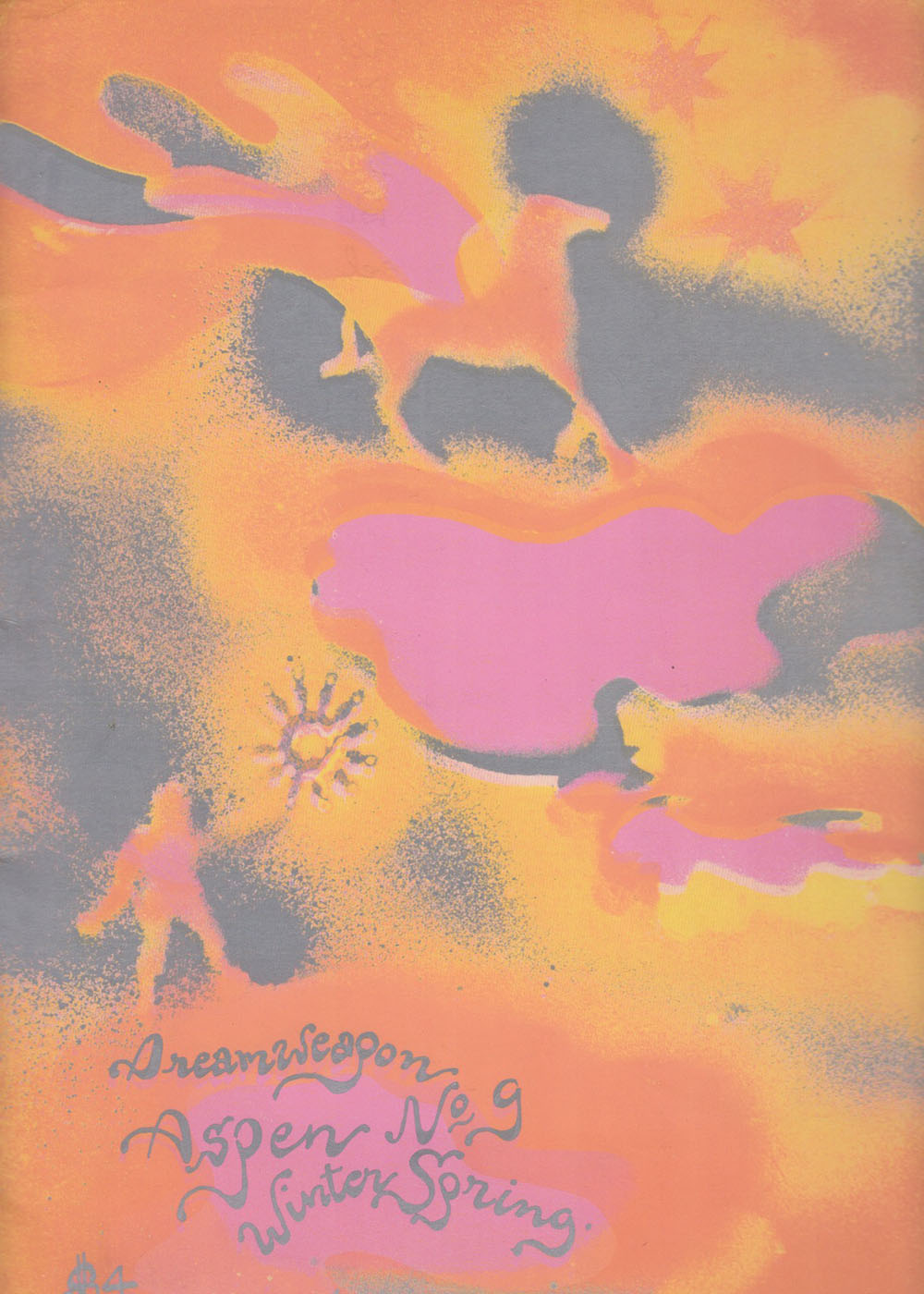
Aspen Issue 9, titled "Dreamweapon," is devoted entirely to psychedelic art and literature. Edited by Angus and Hetty MacLise, the issue comes in a custom box and contains unbound pamphlets, posters, poetry, and booklets exploring the 1960s drug movement and mysticism. Features a curated selection of artists, poets, and musicians centered on psychedelic and avant-garde themes, including contributions from La Monte Young, Terry Riley, and Timothy Leary.

Published in late 1968, Aspen Magazine No. 6a, "Manipulations," was an avant-garde, multimedia box focused on New York’s performative and conceptual art scene. It featured contributions from artists including Nam June Paik and Carolee Schneemann, highlighting the experimental, multi-part nature of the periodical.
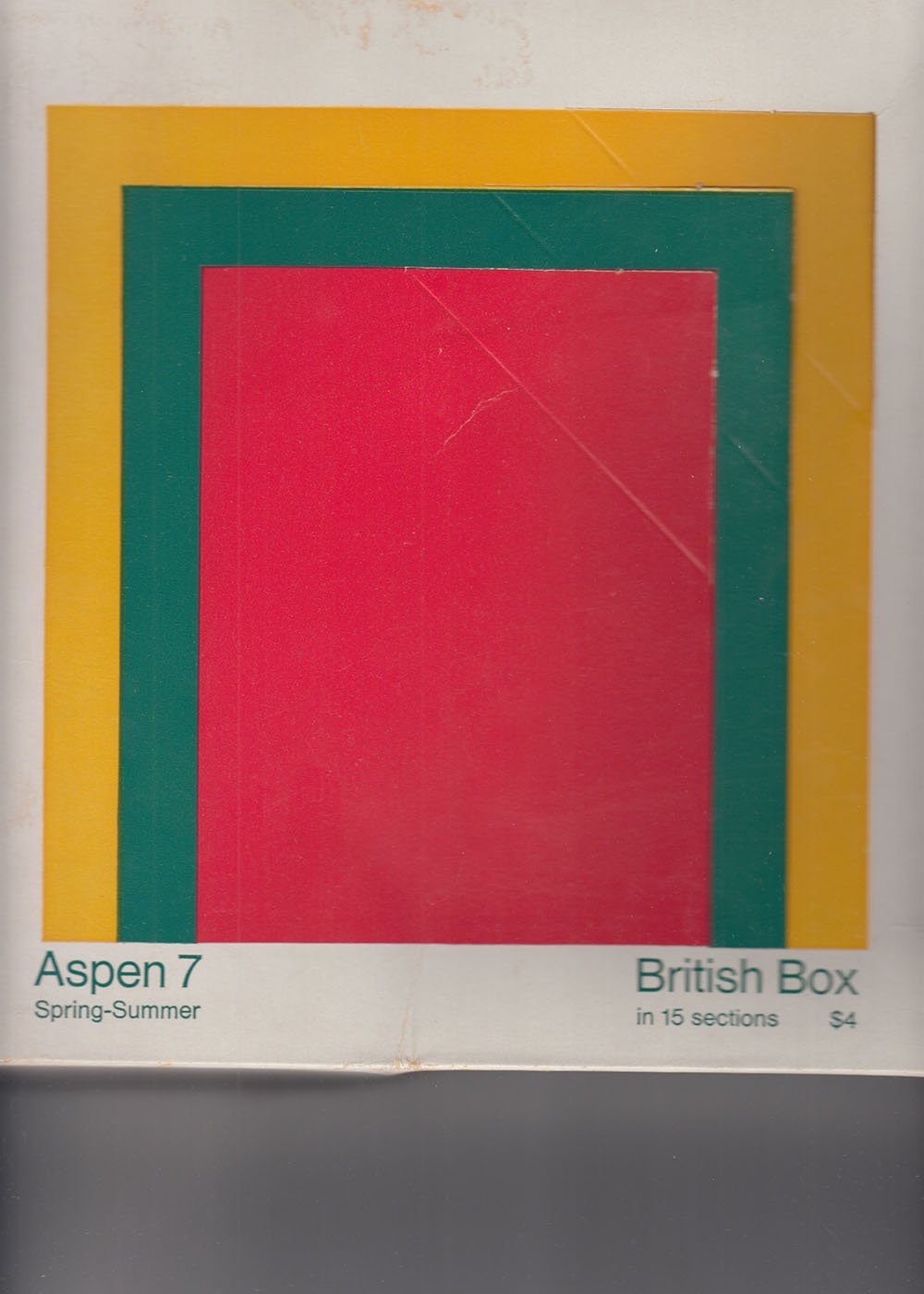
Published in 1970, Aspen Magazine Issue 7 ("British Box") was a multimedia "magazine in a box" showcasing countercultural London. Edited by Mario Amaya, the hinged box contained 14 unbound pieces. Highlights include a John Lennon and Yoko Ono flexi-disc, Eduardo Paolozzi’s coloring book, and an Ossie Clark sewing pattern.

Aspen Issue 8 is widely known as "The Fluxus Issue". Edited by artist Dan Graham, this issue marked a shift toward conceptual art and information science. Rather than a traditional magazine, it took the form of a multimedia portfolio containing 14 unbound sections. Contains works David Antin, Terry Atkinson, Michael Baldwin, Philip Glass, Jackson Mac Low, La Monte Young, Steve Reich, Richard Serra, Yvonne Rainer, Dennis Oppenheim, Robert Morris, and Ed Ruscha.

Published in 1970, Aspen Magazine Issue 7 ("British Box") was a multimedia "magazine in a box" showcasing countercultural London. Edited by Mario Amaya, the hinged box contained 14 unbound pieces. Highlights include a John Lennon and Yoko Ono flexi-disc, Eduardo Paolozzi’s coloring book, and an Ossie Clark sewing pattern.

Published in late 1968, Aspen Magazine No. 6a, "Manipulations," was an avant-garde, multimedia box focused on New York’s performative and conceptual art scene. It featured contributions from artists including Nam June Paik and Carolee Schneemann, highlighting the experimental, multi-part nature of the periodical.

Aspen Issue 9, titled "Dreamweapon," is devoted entirely to psychedelic art and literature. Edited by Angus and Hetty MacLise, the issue comes in a custom box and contains unbound pamphlets, posters, poetry, and booklets exploring the 1960s drug movement and mysticism. Features a curated selection of artists, poets, and musicians centered on psychedelic and avant-garde themes, including contributions from La Monte Young, Terry Riley, and Timothy Leary.

Aspen Issue 8 is widely known as "The Fluxus Issue". Edited by artist Dan Graham, this issue marked a shift toward conceptual art and information science. Rather than a traditional magazine, it took the form of a multimedia portfolio containing 14 unbound sections. Contains works David Antin, Terry Atkinson, Michael Baldwin, Philip Glass, Jackson Mac Low, La Monte Young, Steve Reich, Richard Serra, Yvonne Rainer, Dennis Oppenheim, Robert Morris, and Ed Ruscha.